Total Pageviews

Translate

Showing posts with label Tenerife. Show all posts

Tuesday, 17 March 2015

Tenerife: l'isola Canaria più elevata


Tenerife = El Teide (ma non solo). Al centro di quest’isola approssimativamente triangolare si erge la montagna più alta di Spagna e il suo vulcano più imponente ancora in attività.

El Teide significa anche turismo, poiché attrae milioni di visitatori ogni anno; ciononostante, resta maestoso e distante, incurante delle migliaia di arrampicatori, escursionisti, fotografi e gente che affolla i belvedere. E’ generoso; dà a ciascuno quello che cerca – sole, un picco innevato, aria frizzante, avventura, bizzarre formazioni di lava, paesaggi extraterrestri (Las Cañadas), vegetazione autoctona, un osservatorio per ammirare il cielo notturno trapunto di stelle e tanto altro. E’ spettacolare, e giustamente famoso.

Abbiamo fatto una lunga camminata intorno alla base, a 2200 m sul mare, anziché raggiungere con la funivia il picco a 200 m sotto il livello massimo di 3,781 m, perché ero un po’ a corto di respiro. Non me ne rammarico, sono sicura che sia stato altrettanto incredibile. Il sole splendeva e abbiamo fatto il nostro picnic in un punto tranquillo del possente scenario, sul lato sud della montagna, dove la vegetazione è quasi assente.
 
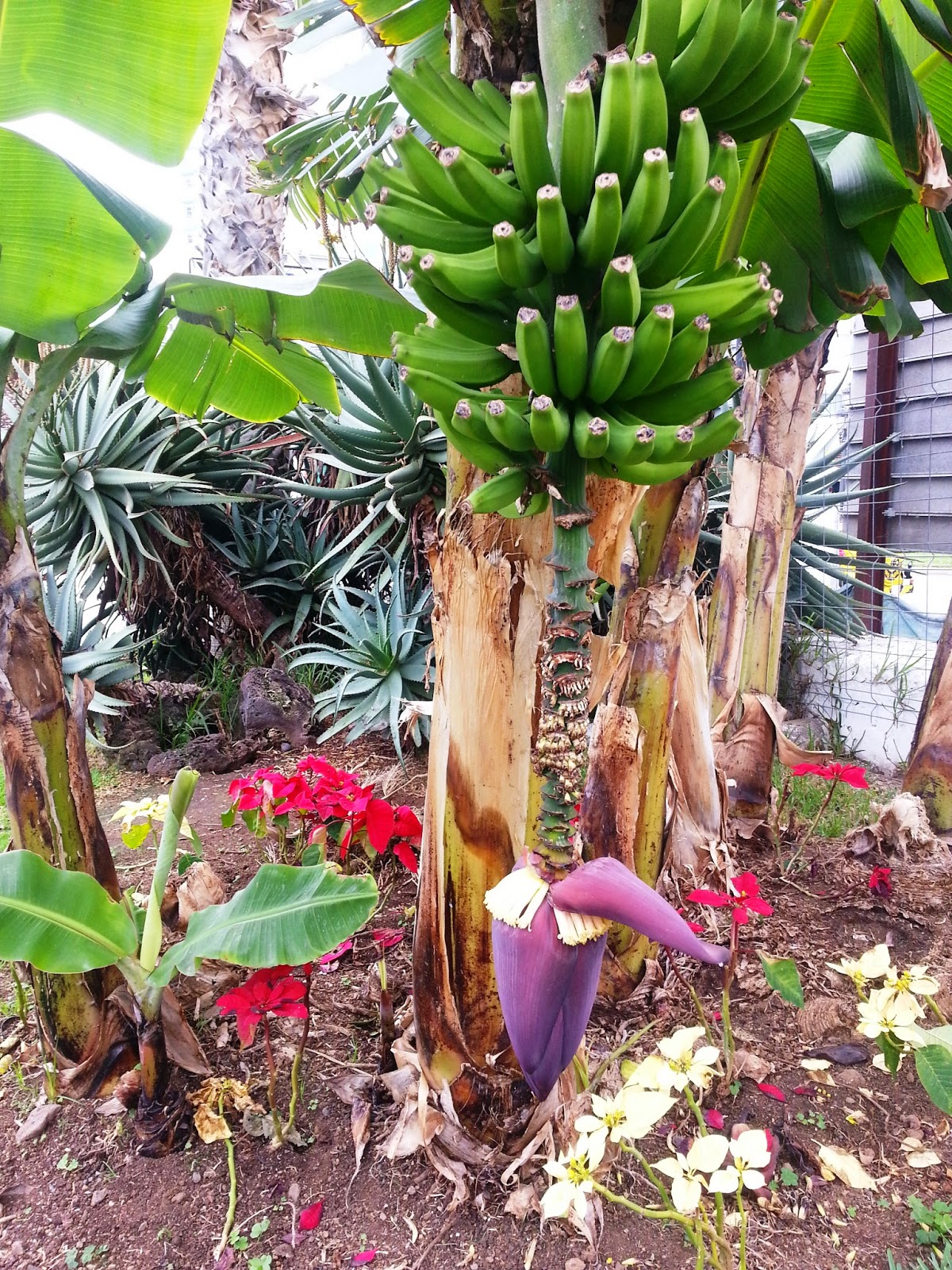
 Sul lato opposto, ci sono quasi permanentemente nuvole, nebbia e neve. In realtà l’isola è divisa in due dal Teide relativamente al clima, in direzione O-E: il nord è sotto l’influenza della corrente del Golfo con un alto grado di umidità, venti occidentali costanti e tempo molto variabile. La vegetazione è lussureggiante e la terra produce generosi raccolti di banane, arance, papaie e tutti i tipi di frutta e verdura. Il Teide forma una barriera, così che il lato sud di Tenerife è arido e perlopiù desertico, con temperature notevolmente superiori rispetto al nord ed è normalmente soleggiato. Questa è una fortuna per i turisti da spiaggia, ma molto meno per gente come noi, che tendiamo a fuggire le folle, così decidiamo di fare campo base a Puerto de la Cruz.

Tenerife non è soltanto il Teide, si capisce. Ci sono luoghi favolosi lungo la costa NO: Icod de los Vinos, Garachico, Buenavista del Norte (con la Punta de Teno), Masca e Los Gigantes, con le scogliere verticali emergenti 600 m dal livello del mare.

Garachico è un villaggio molto ben conservato che nel diciottesimo secolo era il porto principale di Tenerife fino all’ultima eruzione del 1706. Un grosso scoglio (Roque de Garachico) si alza dal mare proprio di fronte. Garachico ha piscine naturali formate dalla lava, pittoresche stradine e un bel piccolo parco (Parque Puerta de Tierra) con un monumento al poeta Rafael Alberti.

Icod de Los Vinos è interessante non solo per il “Drago millenario” (Dracaena draco – l’albero è in realtà molto meno antico) che si trova in un parco molto attraente, ma anche per numerosi luoghi ed edifici, tra cui Casa Cáceres nella piazza omonima, con vegetazione singolare, chiese, ristoranti e il Salón Geográfico de Canarias (museo geografico) inaugurato di recente.

Punta de Teno è il polo d’attrazione del Parque Rural de Teno, il punto più a NE dell’isola, dove oceano e terraferma si scontrano e ti avvincono – una fine del mondo travolgente.
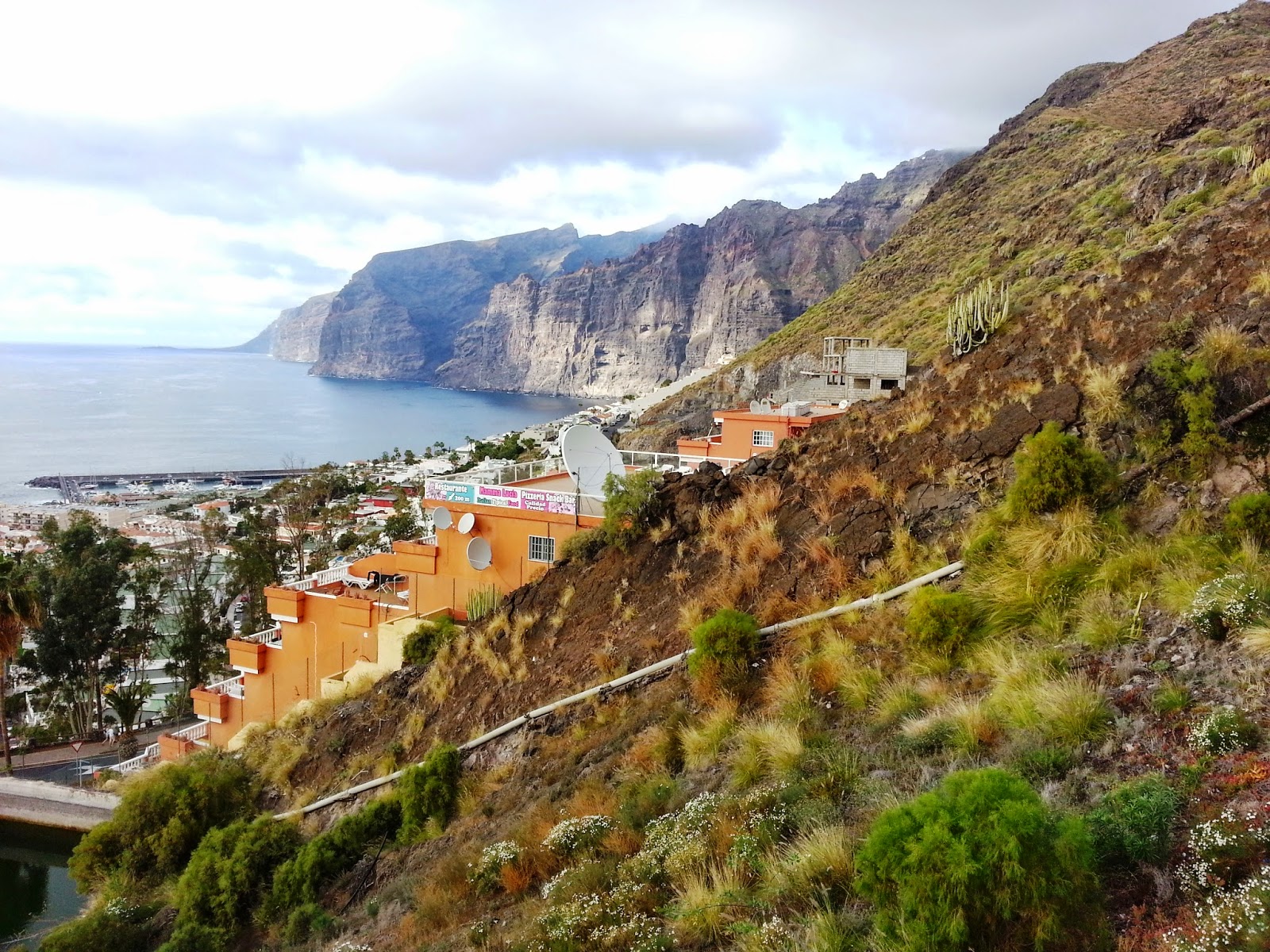
Masca è un paesino appollaiato all’imbocco di una lunga gola che scende verso l’oceano, una vera sfida per gli escursionisti. A 3 km verso sud, dove finisce la gola, iniziano le scogliere di Los Gigantes.


Puerto de la Cruz, il nostro campo base, è una vivace località turistica, sebbene non tanto popolare presso i giovanissimi quanto Playa de las Américas, a sud. Puerto Cruz ha numerosi buoni alberghi, ristoranti e bar, innumerevoli empori e boutique, belle spiagge di fine sabbia nera, angoli pittoreschi e magnifici giardini. I nostri cinque giorni sul posto sono stati gradevoli e rilassanti. Il nostro albergo s’innalzava proprio sulla spiaggia, uno dei tanti hotel-grattacielo costruiti tra gli anni novanta e la prima decade del duemila; la nostra camera era spaziosa e confortevole e dava sull’oceano. La spiaggia e la piscina dell’albergo parevano invitarci, purtroppo le temperature erano troppo invernali per noi. Vicino all’albergo ci sono il medievale Castillo San Felipe, in restauro, e la magnifica Playa Jardín. A pochi passi si è in centro; si raggiunge la Plaza del Charco con i suoi diversi ristoranti e bar attraversando la zona pedonale del quartiere La Ranilla, recentemente rimesso a nuovo e pieno di simpatici localini. Appena a nord di Plaza del Charco ecco il caratteristico porto dei pescatori. Procedendo sempre in direzione est si raggiunge l’Eremitaggio di San Telmo, una graziosa chiesetta cattolica circondata da un giardino tropicale altrettanto grazioso; continuando ancora si arriva a Lago Martiánez, complesso pubblico di piscine salate progettate dall’artista di Lanzarote César Manrique. Oltre a questo c’è Playa de Martiánez, paradiso dei surfisti.

Per finire ecco alcune raccomandazioni per un buon aperitivo e/o un buon pasto.

- Puerto de la Cruz: il Bar Agora serve eccellenti mojitos, il personale è cortese e la connessione wi-fi affidabile; il Restaurante Régulo ha una cucina d’alta classe e il Restaurante La Cofradía offre il pesce e i crostacei più freschi della città;

- Icod de los Vinos (costa nord): il Restaurante Carmen ha un ambiente caratteristico e genuina cucina di Tenerife;

- Costa Adeje (costa sud): il Restaurante Torre del Mirador è in posizione splendida con un’atmosfera molto vivace.


©DaniBlue

17.3.2015

Monday, 16 March 2015

Tenerife: The Highest Canaria


Tenerife = El Teide (but not only). Approximately at the centre of this roughly triangular island rises Spain’s highest mountain and its most awesome volcano still in activity.

 
El Teide means also tourism, because it attracts millions of visitors annually; nevertheless, it remains aloof and majestic, oblivious of the thousands climbing, hiking, taking pictures, crowding the viewing points. It is generous; it gives everybody whatever they are looking for – sunshine, a snow-capped peak, cool air, adventure, bizarre lava formations, extra-terrestrial landscapes (Las Cañadas),


Las Cañadas


peculiar vegetation, an observatory to watch the star-studded night sky and more. It is spectacular, and rightly famous. We took a long hike around its foot, at 2000 m a.s.l., rather than ride the cable car to within 200 m of the 3,781 m peak, because I felt a slight shortness of breath. I don’t regret it, since it was equally incredible, I am sure. The sun was shining and we had our picnic in a quiet spot of the mighty scenery, on the south side of the mountain, where the vegetation is almost absent. On the opposite side, there are almost permanent clouds, fog and snow. In fact, the island is divided weather-wise in a W-E direction by El Teide: the North is under the influence of the Gulf Stream, with a high level of humidity, constant westerly winds and very variable weather. The vegetation is luxuriant and the land produces generous crops of bananas, oranges, papayas and every kind of fruits and vegetables. El Teide forms a barrier, so that the South of Tenerife is arid and largely desert-like, the temperatures are remarkably higher than in the North and the sun shines most of the time. This is fortunate for the beach-goers, but less so for people like us, so we decided to be based in Puerto de la Cruz.


Tenerife is not only El Teide, of course. There are fabulous places along the NW coast: Icod de los Vinos, Garachico, Buenavista del Norte (with Punta del Teno), Masca and Los Gigantes, sheer cliffs emerging 600 m from the level of the sea.
 
Garachico
Garachico is a well-preserved 18th c. village that used to be Tenerife’s main port until the 1706 eruption. There is a rock (Roque de Garachico) rising from the sea just in front of it.

Puerta de Tierra park


Garachico has natural lava pools, attractive narrow streets and a lovely park (Parque Puerta de Tierra) with a monument to the poet Rafael Alberti.


Icod: Bizarre "menorah" dracaena

Casa Càceres


Courtyard


El Drago Milenario (Dracaena draco)
Icod de Los Vinos is interesting not only for its “1000-year old Dragon Tree” (Dracaena draco – actually not half as old as that) set in an attractive park, but also for a number of places and buildings, including the Cáceres house in the square with the same name, and interesting vegetation, churches, restaurants and the newly opened Salón Geográfico de Canarias (Geographic Museum).


Punta de Teno lighthouse


Punta de Teno is the highlight of the Teno Rural Park, the north-westernmost tip of the island, where land and ocean meet and fight for attention – a most fascinating world’s end.


Masca is a small perched village where a long gorge starts descending to the ocean, a real challenge for hikers. 3 km south where the gorge ends Los Gigantes bluffs begin.

Puerto de la Cruz, our base camp, is a lively resort, although not quite so popular with young people as Playa de las Americas, in the South. Puerto Cruz has plenty of good hotels, restaurants and bars, countless shops and boutiques, attractive black sand beaches,

Playa Jardín
quaint corners and beautiful gardens. Our five-day stint was pleasant and exciting. Our hotel stood directly on the beach, one of the many multi-storey hotels built in the 1990s-2000s, and our comfortable room looked out on the ocean. The beach and the hotel pool looked very inviting, unfortunately the winter temperatures were too low for us. 
Castillo San Felipe
Next to the hotel was the Castillo San Felipe, in restoration, and the attractive Playa Jardín. A short walk from the hotel was the town centre; we reached Plaza del Charco with its numerous restaurants and bars walking through the pedestrian district of La Ranilla, recently renovated and filled with great locales. Just north of Plaza del Charco is the picturesque fisherman’s harbour. 
Ermita de San Telmo
If you continue in the same direction you reach the Ermita de San Telmo, a small, pretty catholic chapel surrounded by an equally pretty tropical garden; if you walk further east you come to Lago Martiánez, a public complex of saltwater pools designed by the Lanzarote artist César Manrique. Beyond it is the Playa de Martiánez, a surfers’ paradise.


Lago Martianez


Playa Martianez


Next a couple of recommendations for a good aperitif and/or good dinners.

- Puerto de la Cruz: Bar Agora for excellent mojitos, friendly staff and reliable wi-fi connection; Restaurante Régulo, for high-class cuisine and Restaurante La Cofradía for the freshest fish and seafood in town;


- Icod de los Vinos (north coast): Restaurante Carmen, with typical décor and genuine Tenerife cuisine;


- Costa Adeje (south coast): Restaurante Torre del Mirador, with magnificent setting and very lively atmosphere.


(C) DaniBlue
16th March 2015